

Plush Factory Audits and Documents
Match audits, management systems, material certificates, buyer approvals, and testing to the product and market.
- ✓ Factory audits and system certificates
- ✓ Material and paper-packaging scope
- ✓ Testing by product and market
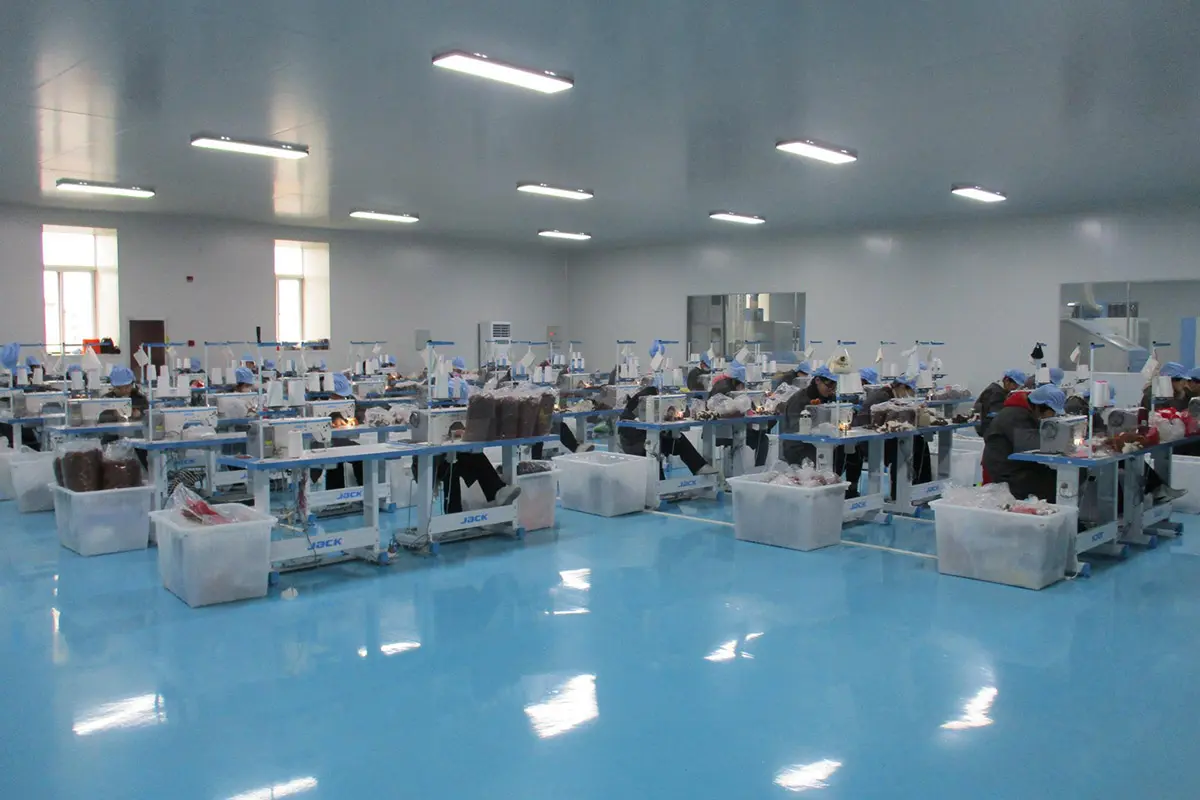
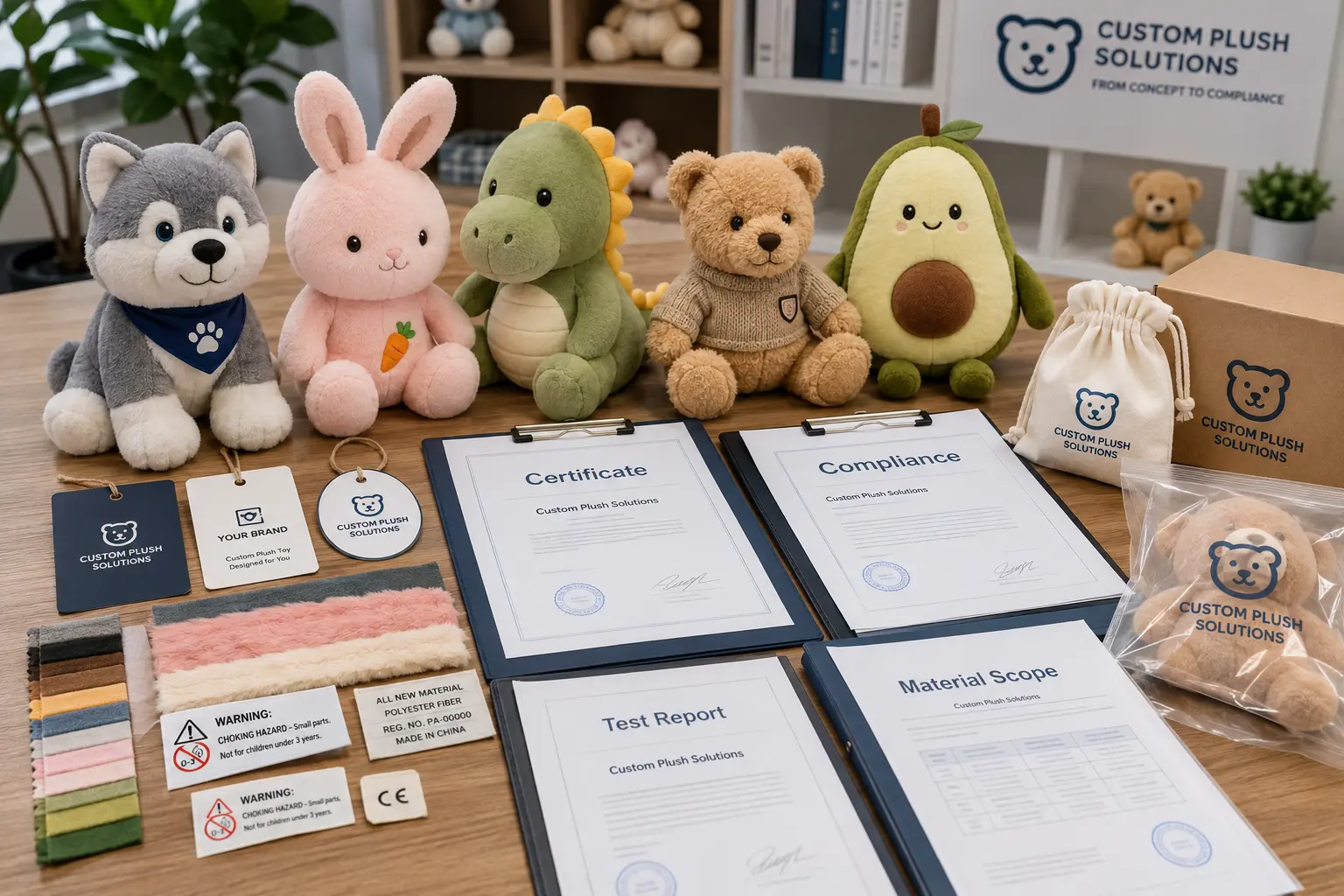
Match Each Document to Its Purpose
Document types: Factory audits, ISO systems, material certificates, FSC paper scope, buyer approvals, and market test reports.
Before production: Confirm market, age group, structure, materials, accessories, packaging, labels, channel, retailer, IP, and audit needs.
For each document: Check the holder, number, scope, issuer, validity, and whether it covers the factory, material, packaging, finished product, or authorization.
Request DocumentsDocument Types and Scope
Factory audits, product tests, material certificates, and retailer authorizations are not interchangeable.
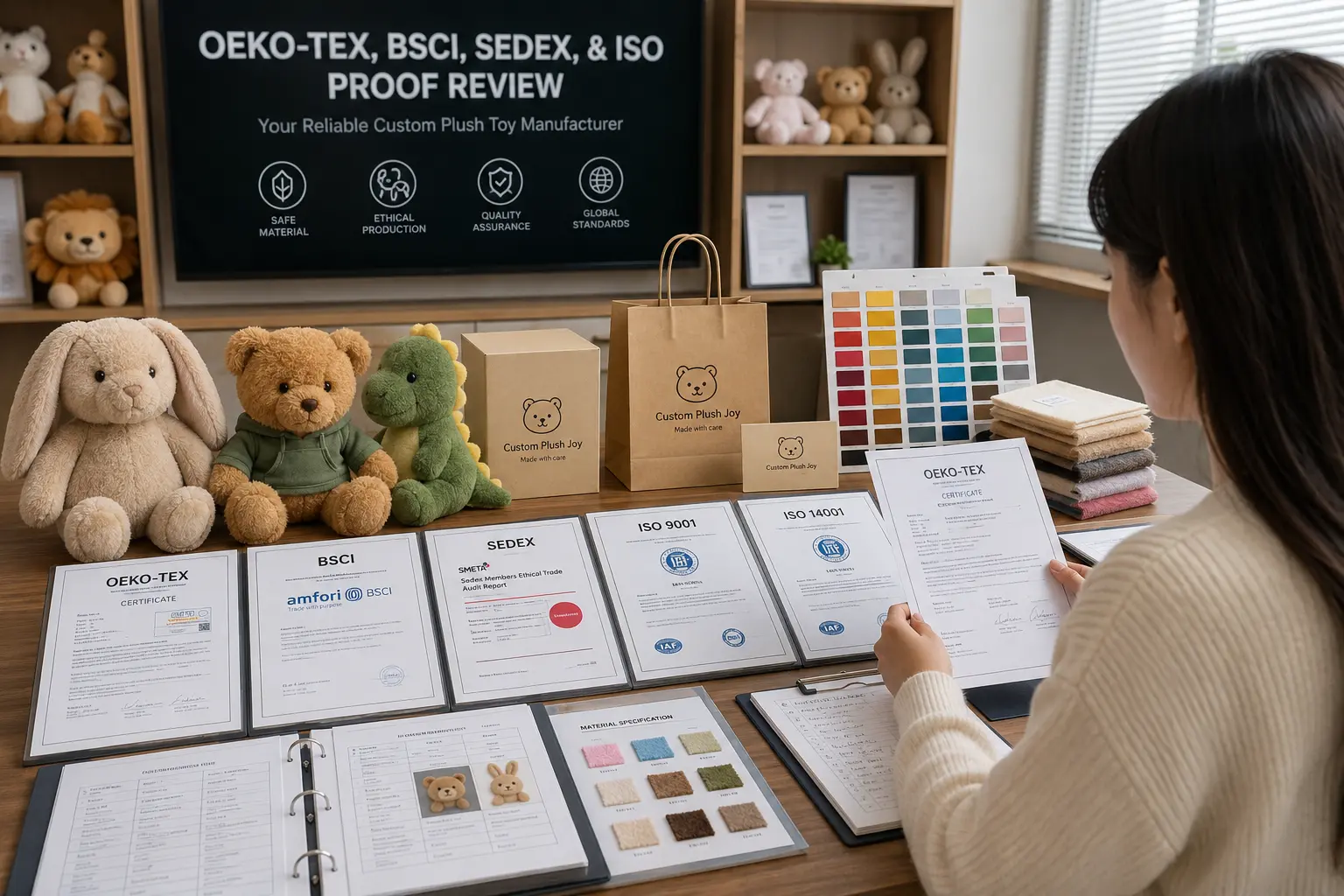
BSCI
Purpose: Social-responsibility audit used in supplier review.
Verify: Scope, factory name, date, and validity.
SEDEX / SMETA
Purpose: Review labor, ethics, health, safety, and management.
Verify: Audit type, site scope, report date, and buyer needs.
ISO 9001
Purpose: Review process, documentation, and quality control systems.
Verify: Scope, issuing body, and validity.
ISO 14001
Purpose: Review the factory environmental management system.
Verify: Scope, issuing body, and validity.
FSC
Scope: Suitable paper tags, cards, cartons, or gift boxes when supported.
Limit: Not a default plush-toy certificate.
OEKO-TEX Standard 100
Scope: Textile materials covered by the matching document.
Verify: Exact material, supplier, and certificate scope.
GRS
Scope: Recycled fabric or filling when the material and supply chain support the claim.
Verify: Transaction and material scope when needed.
GOTS
Scope: Organic textiles covered by the matching document.
Limit: Not automatic for all plush products.
Separate Factory Audits from Product Tests
Factory: BSCI and SEDEX / SMETA cover social responsibility; ISO 9001 and ISO 14001 cover management systems. They are not finished-toy safety reports.
Buyer-specific: Disney FAMA, NBCU, Walmart, Target, and similar requirements depend on the buyer, IP, brand, product, factory scope, and order.
Next step: Check which current documents apply and whether another buyer review is needed before production.
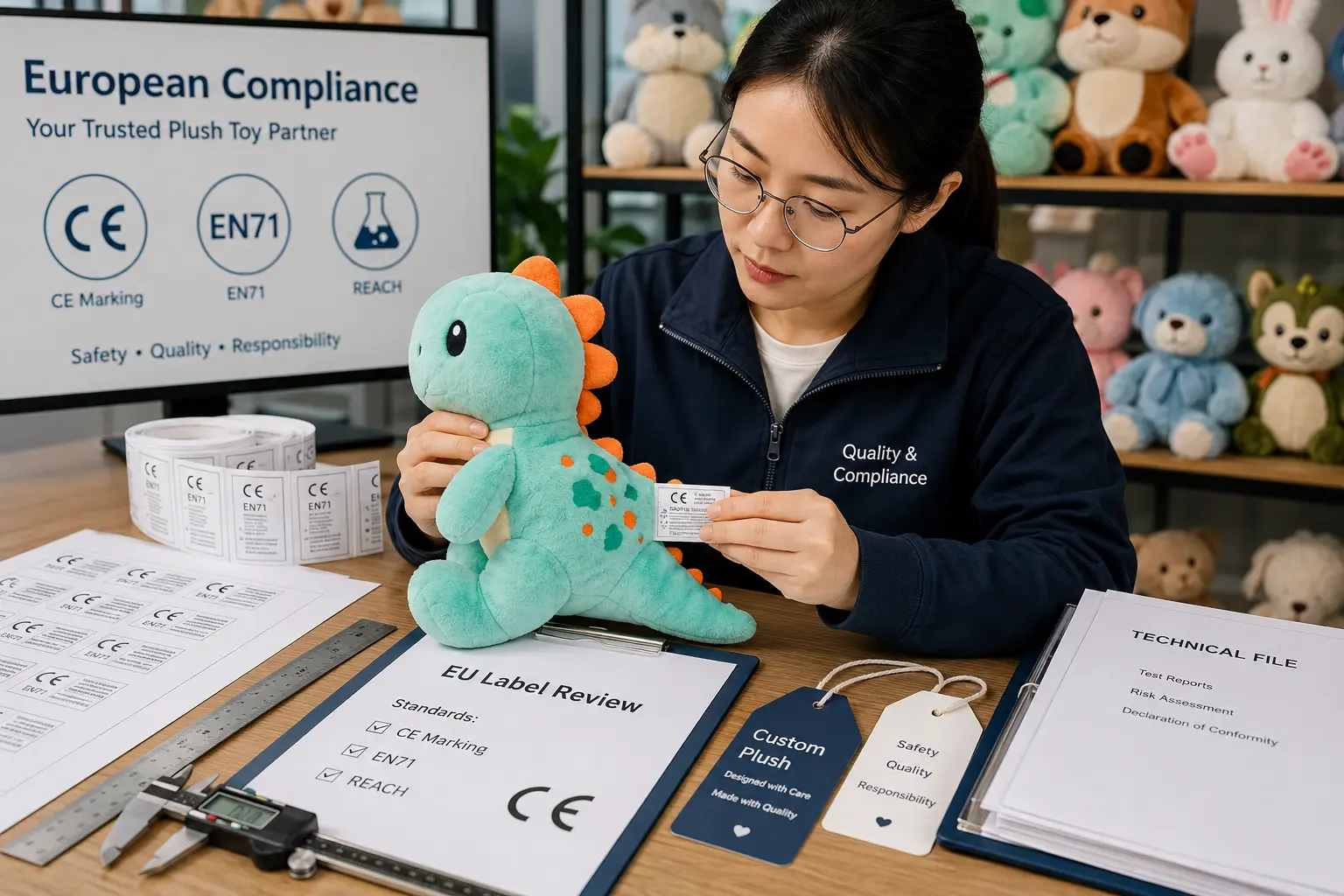
Match Certificates to the Exact Material
Match documents to the exact fabric, filling, trim, supplier, or paper item—not every finished plush product.
FSC Paper
Scope: Selected paper tags, cards, cartons, or gift boxes.
OEKO-TEX Fabric
Scope: Selected textiles covered by the certificate.
GRS Material
Scope: Recycled fabric or filling supported by the supply chain.
GOTS Material
Scope: Organic textiles supported by the specific scope.
Finished Product
Separate: Testing depends on market, age group, and product structure.
What Changes the Test Scope
Compliance planning should start before sampling if the product will be sold in a regulated market.
Target Market
Varies by: EU, UK, US, and retail-platform standards.
Target Age Group
Varies by: Baby, toddler, child, teen, adult gift, or collectible use.
Product Use
Varies by: Retail toy, gift, mascot, keychain, pillow, or decoration.
Small Parts
May affect: Eyes, hardware, buttons, bows, accessories, and detachable parts.
Materials
Review: Short plush, minky, velboa, faux fur, sherpa, PP cotton, prints, and trims.
Labels
May need: Age, warning, wash, importer, and batch information.
Packaging
May need: Bag warnings, box details, retail packs, barcodes, carton marks, and Amazon labels.
Sales Channel
May request: Retailer, Amazon, distributor, or importer documents.
Common Market and Buyer Requirements
Examples only—the exact scope depends on the product and sales plan.
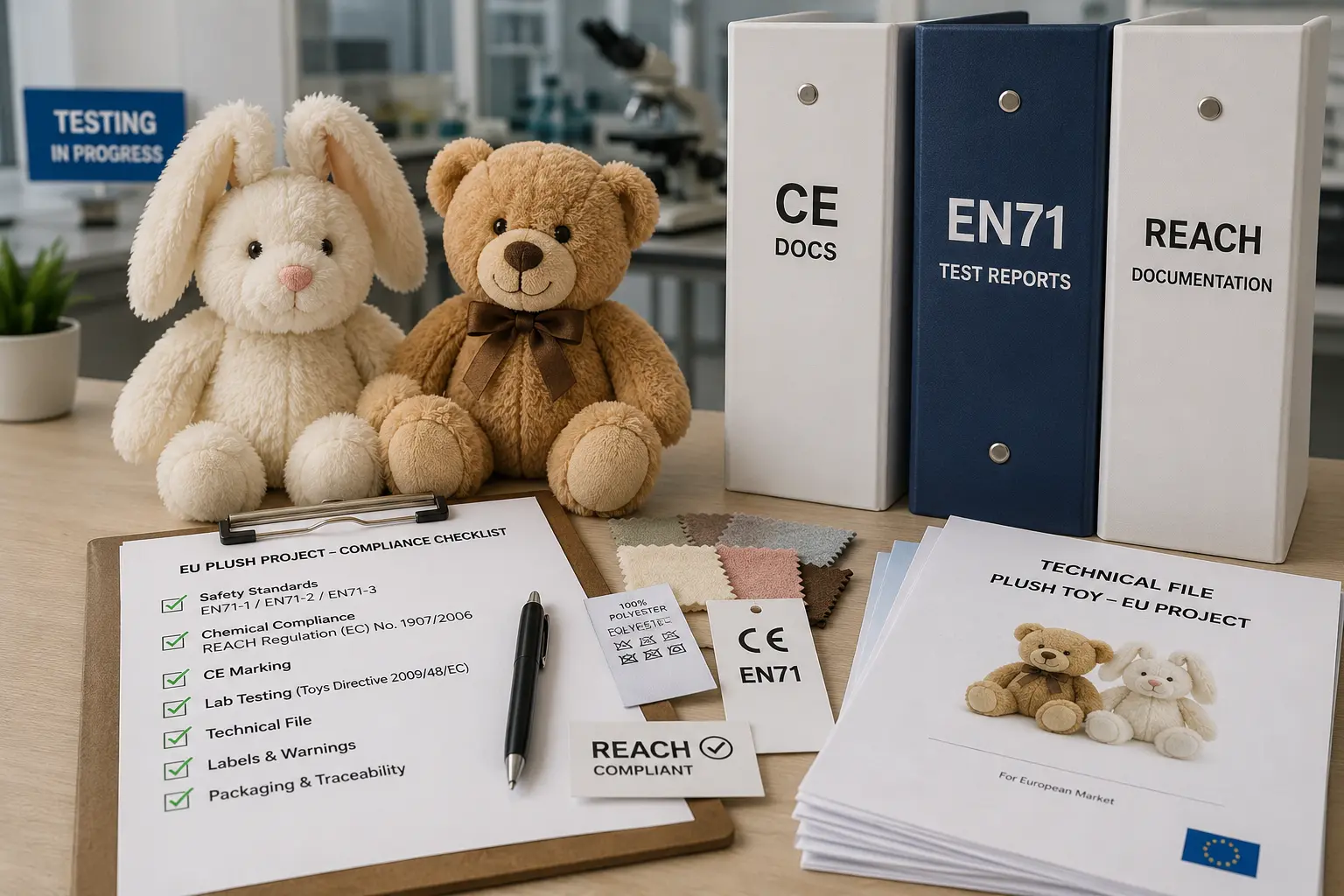
EU Market Requirements
May involve: EN71, CE documents, REACH material review, age and warning labels, importer details, and packaging marks.
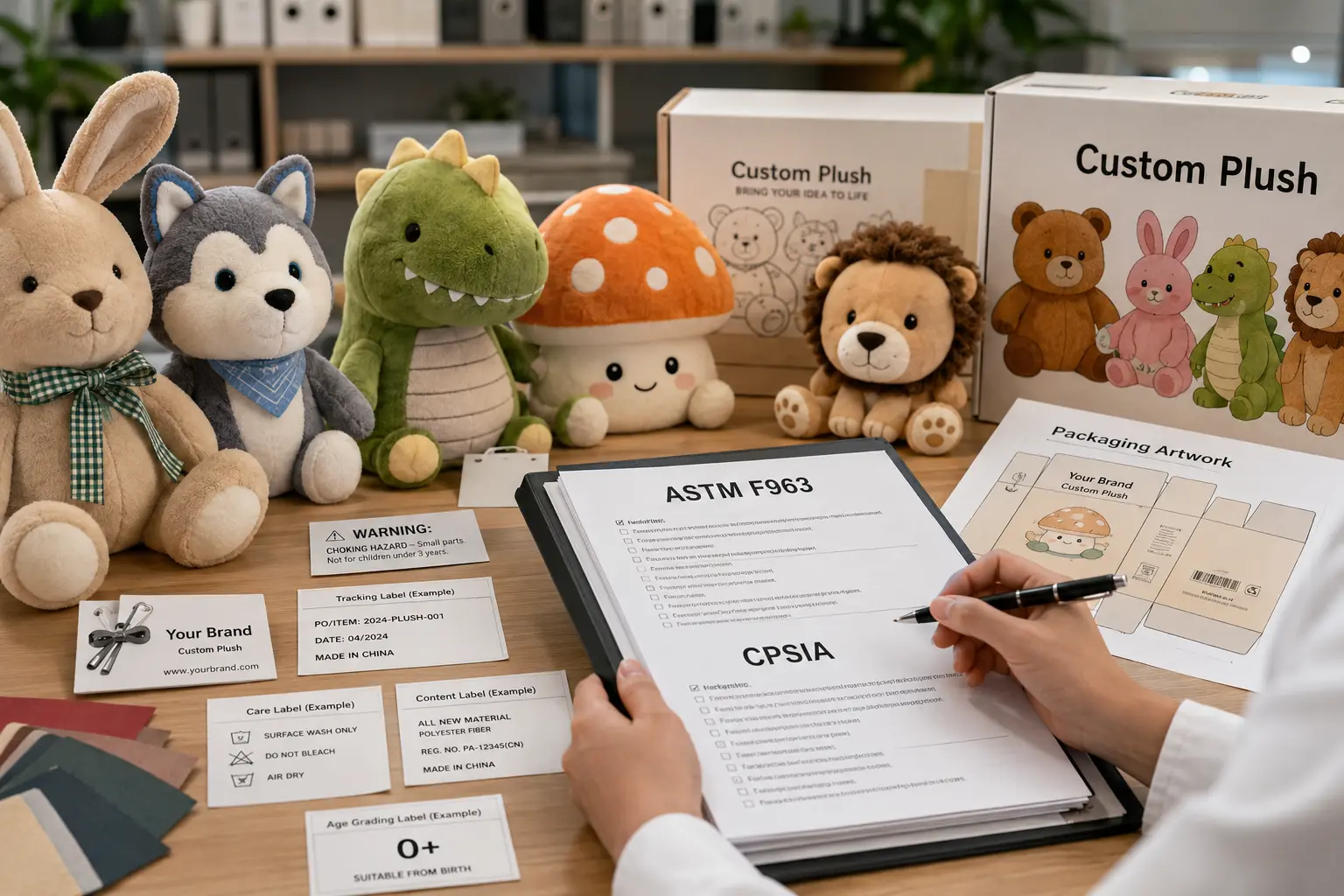
US Market Requirements
May involve: ASTM F963, CPSIA, lead, phthalates, tracking labels, and children's product documents.
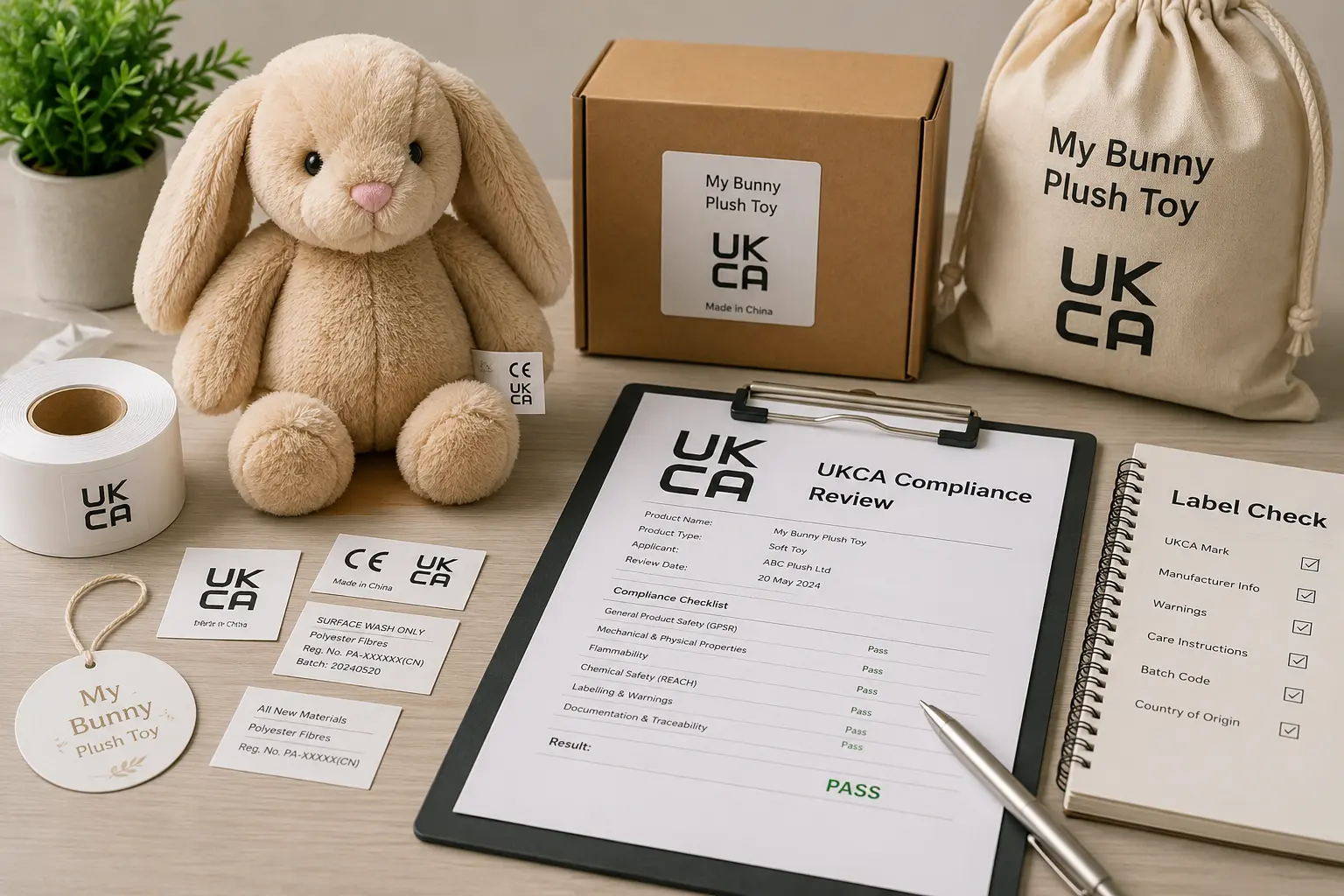
UK Market Requirements
May involve: UKCA-related marks and documents. Confirm accepted reports, importer details, and labels.
Customer Audit and Authorization Needs
Buyer-specific: Disney FAMA, NBCU, Walmart, Target, and similar audits or authorizations are not universal certificates.
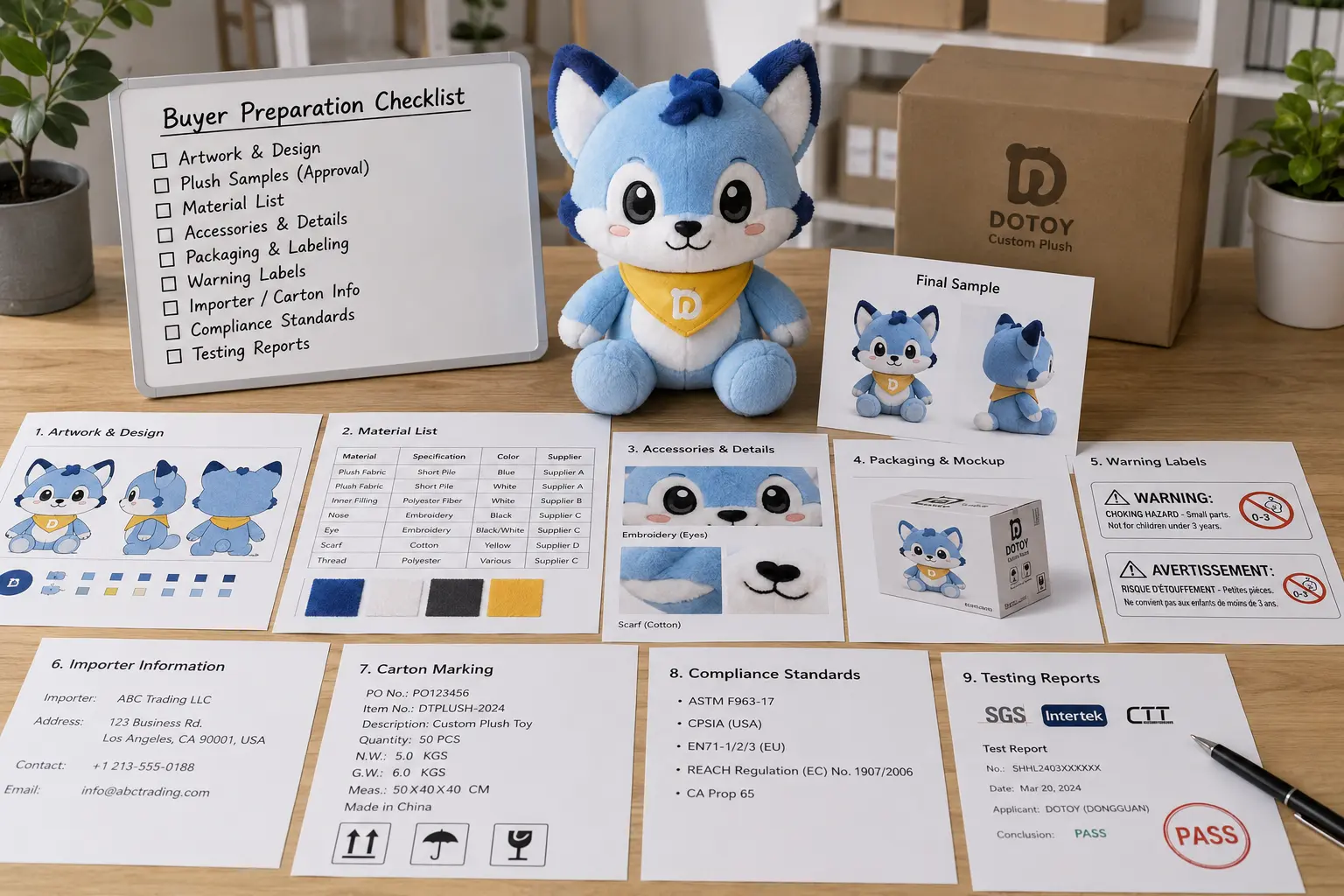
Prepare Details for Document Review
Before testing or production, prepare:
QC and Third-Party Testing Are Different
In-house QC: Workmanship, shape, seams, embroidery, filling, labels, packaging, consistency, and needle inspection when required.
Third-party testing: Set by market, age, materials, accessories, and channel. Confirm the test scope and laboratory requirements before bulk production.
View In-House QC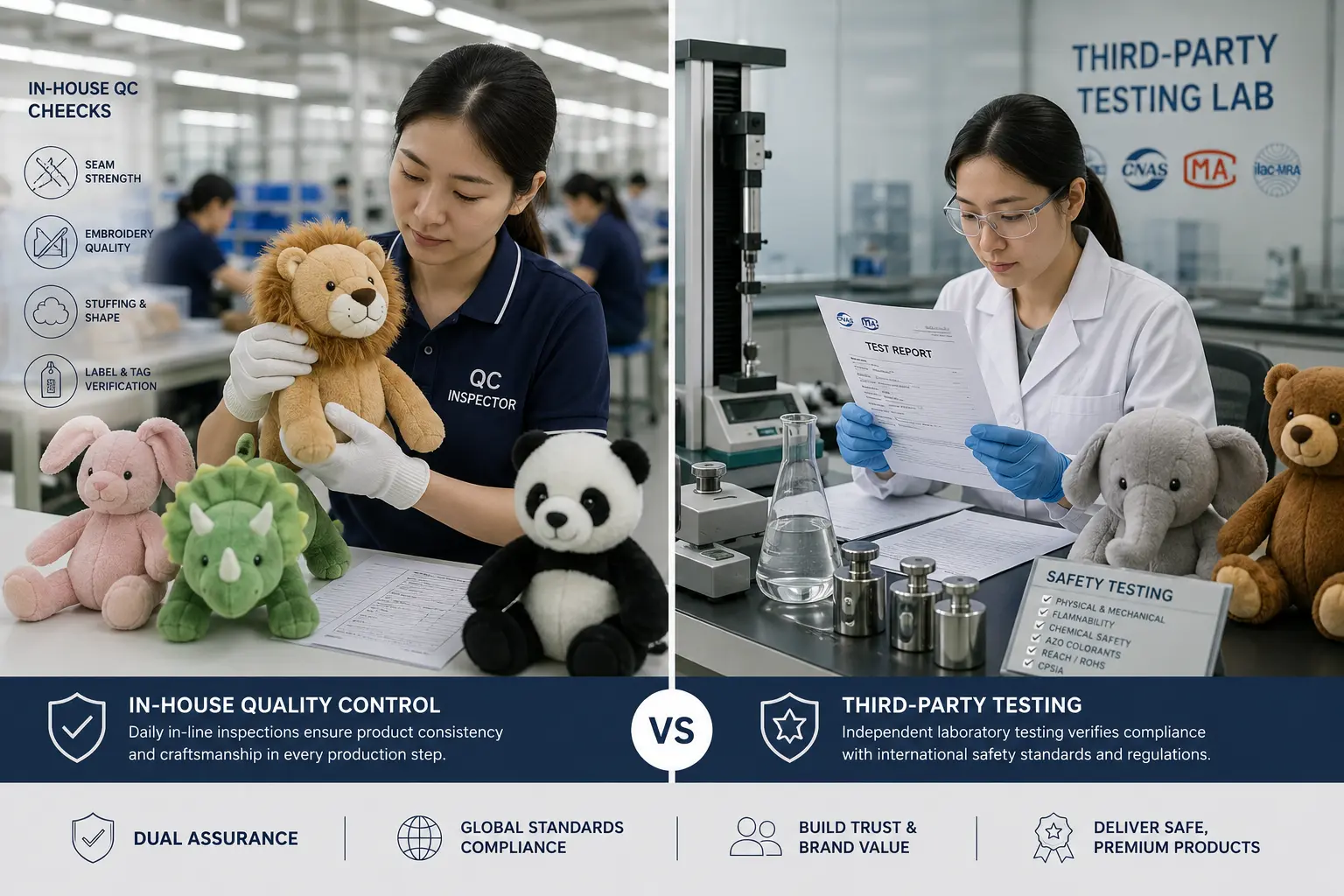
Send Your Document Requirements
Include product design, destination, target age, materials, accessories, labels, packaging, and sales channel.
Request Document Review